How to Choose a Cosmetic Surgeon in Cebu: What Patients Should Look for Before Booking
Searching for a cosmetic surgeon can quickly become overwhelming.
A search for cosmetic surgery in Cebu can lead to clinic websites, social media accounts, before-and-after photos, patient testimonials, procedure packages, promotional prices, and videos promising particular transformations. With so much information available, it can be difficult to know what actually matters when deciding whom to trust with a procedure.
For Cebu-based cosmetic surgeon Dr. Donna Borres Eramis, founder and head-surgeon of D’Sculpt Face & Body Center, patients should look beyond what they see on a surgeon’s social media feed.
Choosing a cosmetic surgeon is a medical decision. Credentials, communication, treatment planning, patient suitability, surgical preparation, recovery, and continuity of care all deserve consideration before a patient commits to a procedure.
Here are some of the most important things to evaluate.
1. Know Who Will Be Performing Your Procedure
One of the first things patients should know is who will actually be performing their procedure.
Beyond the clinic’s name or reputation, it is reasonable to ask about the physician’s medical background, relevant training, and experience with the procedure being considered.
Credentials and professional affiliations are only one part of choosing a physician. A thorough consultation, careful assessment, clear communication, and realistic expectations are equally important.
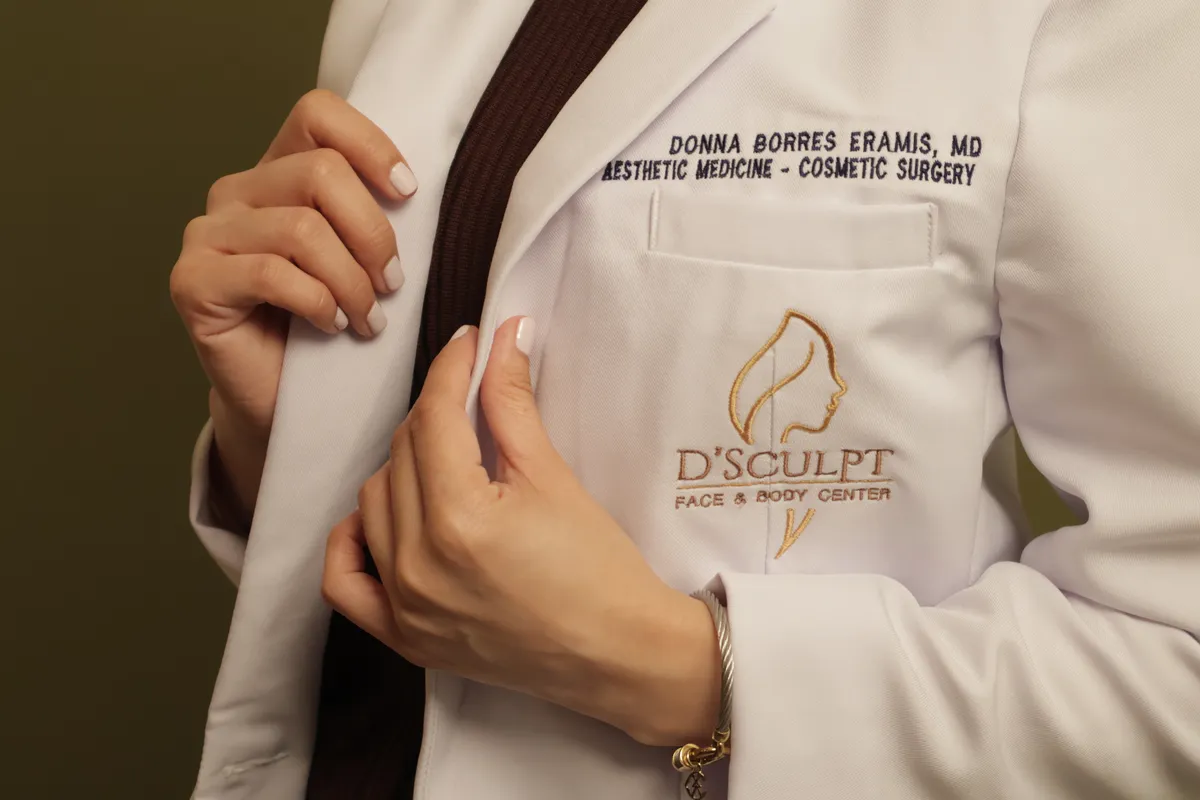
Dr. Donna Borres Eramis completed her cosmetic surgery training with the Philippine Academy of Aesthetic Surgery (PAAS) and subsequently passed the Philippine Federation of Cosmetic Surgeons (PFCS) board examination. She continues to develop her surgical experience through clinical practice and continued learning, including her work and exposure in Manila, which she hopes to bring back to her practice in Cebu.
Ultimately, knowing your physician’s background is simply part of making an informed and comfortable decision about your care.
2. Pay Attention to What Happens During the Consultation
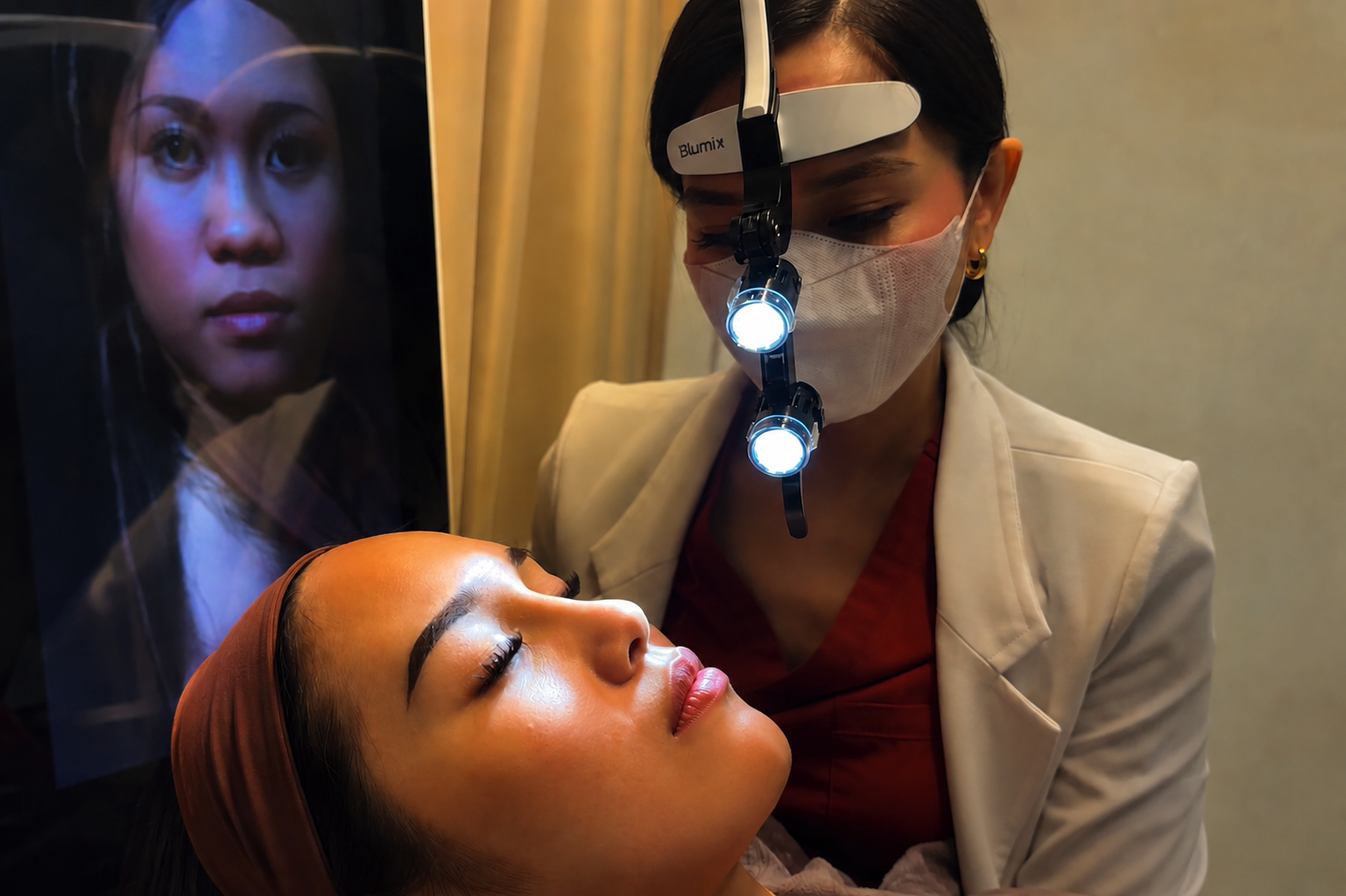
A consultation should involve much more than choosing a procedure and receiving a quotation.
It is an opportunity to discuss what you would like to change, your expectations, relevant medical history, and whether the result you have in mind is realistic and achievable for your individual anatomy.
“Patients should understand why a procedure is being considered, what it can realistically achieve, its limitations, and what the process will require from them,” says Dr. Donna Borres Eramis.
Sometimes, the procedure a patient initially asks for may not be the procedure ultimately recommended. In some cases, the desired result may also not be safely or realistically achievable.
You might arrive asking about a particular technique after seeing it online, but your anatomy, goals, medical considerations, or desired outcome may make a different approach more appropriate—or, in some cases, mean that proceeding with surgery is not advisable.
A meaningful consultation should ultimately help answer what is appropriate and realistically achievable for you, rather than simply confirming the procedure you initially intended to have.
3. Understand That Every Result Is Individual
Cosmetic surgery can create meaningful changes, but no two patients begin with exactly the same anatomy, and no two patients heal in exactly the same way.
Photos and reference images can be helpful in communicating the kind of result you are hoping for—whether you prefer something subtle or a more noticeable change. However, they should serve as a reference for discussion, not a blueprint for an identical result.
What may be achievable for one patient may not be appropriate or possible for another. Factors such as anatomy, skin quality, existing structures, previous procedures, and the individual healing process can all influence the final outcome.
A good consultation should therefore focus on what can realistically and safely be achieved for you, including the possibilities and limitations of the procedure.
4. What To Look For In Before-and-After Photos
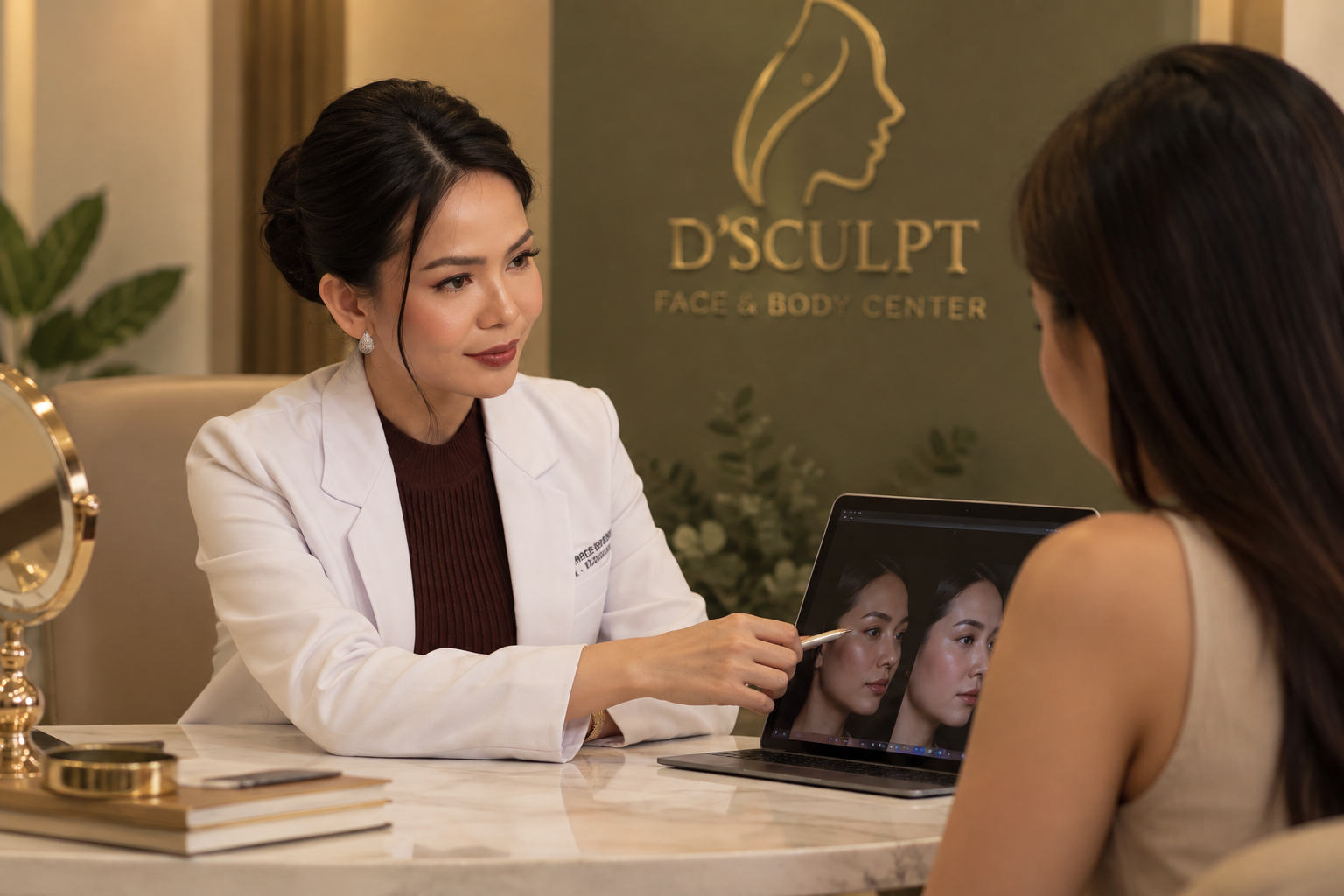
Before-and-after photographs can be helpful when researching a cosmetic surgeon, but they should be viewed as examples of individual outcomes rather than a promise of what your own result will look like.
When reviewing photos, consider patients whose starting concerns or anatomy may be reasonably comparable to yours. It is also helpful to look at whether the photographs use similar angles, lighting, positioning, and facial expressions, as these can affect how results appear.
The timing of the “after” photograph also matters. A result captured shortly after a procedure may look different from one taken several months later, as swelling continues to settle and tissues heal.
Before-and-after photos can give you an idea of a surgeon’s work and approach, but your own result will still depend on your individual anatomy, the procedure performed, and how your body heals.
5. Consider The Surgical Setting And Care Team
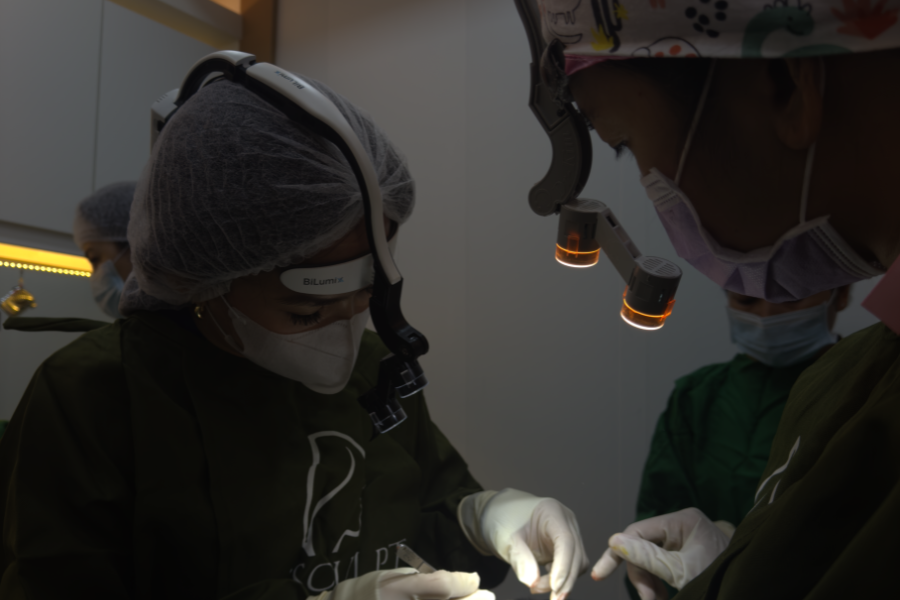
Patients often spend time learning about their surgeon and procedure, but where the surgery will take place and who will be involved in their care are also important considerations.
The appropriate surgical setting may vary depending on the procedure, anesthesia plan, medical history, and individual needs of the patient. Some procedures may be performed in a properly equipped clinic, while others may be more appropriately performed in a hospital or surgical facility.
Beyond the primary surgeon, the care team may include an anesthesiologist, assisting physician or surgeon, surgical nurse, and circulating staff, depending on the procedure.
Patients should feel comfortable asking about the surgical setting, anesthesia, and the team who will be caring for them throughout the procedure.
Ultimately, the setting and care team should be appropriate for the procedure and the individual patient.
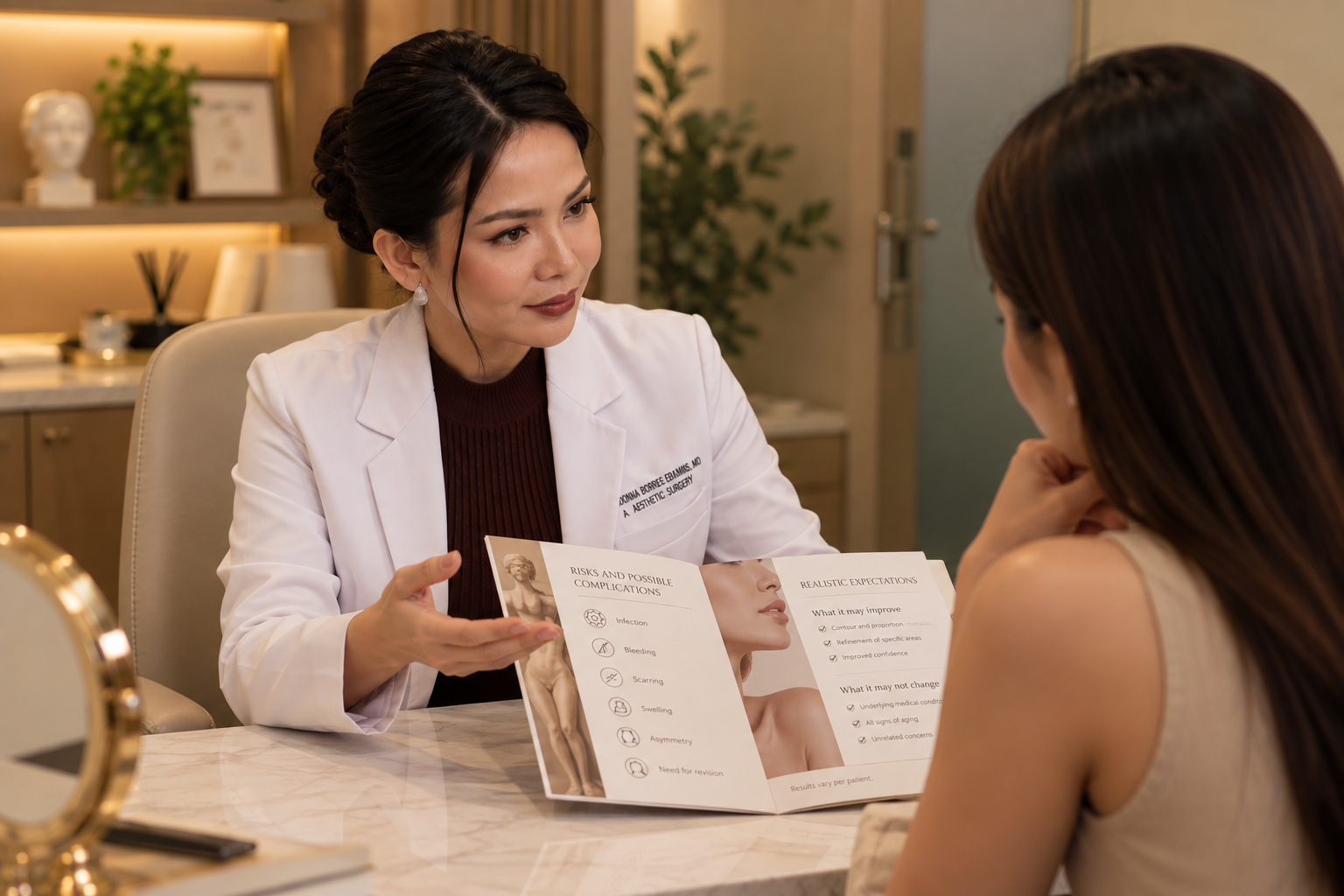
6. Make Sure Risks and Limitations Are Actually Discussed
A consultation that discusses only benefits is incomplete.
Every surgical procedure carries potential risks, and limitations, and these should be part of the conversation before deciding to proceed.
Patients should understand what the procedure may realistically improve, what it may not change, what recovery involves, and when the final result can reasonably be assessed.
It is also important to discuss possible risks and complications specific to the procedure, as well as factors that may affect healing and the outcome.
These conversations help patients develop realistic expectations and make a more informed decision about their care.
Understanding both the possibilities and the limitations of surgery is an important part of being prepared for the procedure.
7. Understand What Recovery Really Looks Like
One of the easiest mistakes to make when planning cosmetic surgery is focusing on the procedure date while underestimating what comes afterward.
Recovery varies considerably by procedure and patient.
Before scheduling surgery, it is helpful to understand when you may reasonably return to work, exercise, travel, drive, attend important events, and resume your usual activities.
It is also important to understand the difference between downtime and complete healing. Being able to return to your normal routine does not necessarily mean that swelling has completely resolved or that the final result is already visible.
“Patients naturally look forward to the result, but surgery is only one part of the process. Preparation, recovery, follow-up, and allowing the body time to heal all matter,” says Dr. Donna Borres Eramis.
Understanding the expected recovery timeline can help patients plan appropriately and have more realistic expectations throughout the healing process.
8. Know What To Expect After Surgery
Surgical care does not end when the procedure is finished. Follow-up and communication throughout recovery are also important parts of the process.
Before surgery, patients should be able to ask what happens after you leave the operating room or clinic.
Who should you contact if you have a concern?
When are your follow-up visits?
How many follow-up visits may be necessary?
What symptoms should prompt you for earlier assessment?
What happens if you are worried about how you are healing?
Post-operative care is one reason location can become an important practical consideration for patients.
For patients living in Cebu or elsewhere in the Visayas, having reasonable access to their surgical team may make scheduled follow-ups and postoperative concerns easier to manage.
Ultimately, patients should have a clear understanding of what their postoperative care will involve and how they can reach their care team throughout recovery.
9. Look Beyond The Price Alone
Cost is understandably an important consideration when planning cosmetic surgery, but the quoted price is only one part of the overall picture.
When comparing options, patients should know what is included in the quotation. Depending on the procedure, this may include professional fees, anesthesia, facility-related costs, medications, pre-operative requirements, postoperative care, and other procedure-specific expenses.
Different quotations may also reflect different procedures, surgical plans, anesthesia requirements, or inclusions, so prices may not always be directly comparable.
Rather than asking only, “How much is the procedure?” it can be helpful to also ask, “What is included in the cost, and are there any other expenses I should expect?”
A clear understanding of the overall plan and its inclusions can help patients make a more informed decision.
10. Notice How the Surgeon Responds to Questions
You should be able to ask questions without feeling that you are inconveniencing your surgeon or being pressured to decide immediately.
Cosmetic surgery is elective. Patients have an opportunity to understand their options before proceeding.
Pay attention to whether your concerns are taken seriously and whether explanations are understandable.
A good consultation does not require you to know medical terminology. Your surgeon should be able to explain your options in language you understand.
You should leave knowing more about your decision than when you entered.
11. Not Every Consultation Has To End In Surgery
One of the most important signs of responsible treatment planning can sometimes be hearing something you did not expect.
Not every consultation needs to end with surgery.
A surgeon may determine that the requested procedure is not suitable for your anatomy, that another option may be more appropriate, that additional medical evaluation is necessary, or that it would be better to postpone treatment.
There may also be a significant difference between what a patient expects and what surgery can realistically achieve.
In those situations, recommending against a procedure is part of responsible medical judgment.
The purpose of a consultation is not simply to arrive at a procedure, but to determine what is appropriate for the individual patient—even when that means waiting or choosing not to proceed.
Choosing a Cosmetic Surgeon in Cebu Is About More Than the Procedure
When considering cosmetic surgery, it is natural to look at before-and-after photos, procedure options, costs, and information available online. These can be helpful starting points, but there are other factors worth considering as well.
The consultation, the proposed treatment plan, realistic expectations, potential risks and limitations, recovery, surgical setting, care team, and postoperative follow-up all form part of the overall experience.
Ultimately, cosmetic surgery is an individual decision. Taking the time to ask questions, understand your options, and determine whether a procedure is appropriate for you can help you make a more informed and comfortable choice.
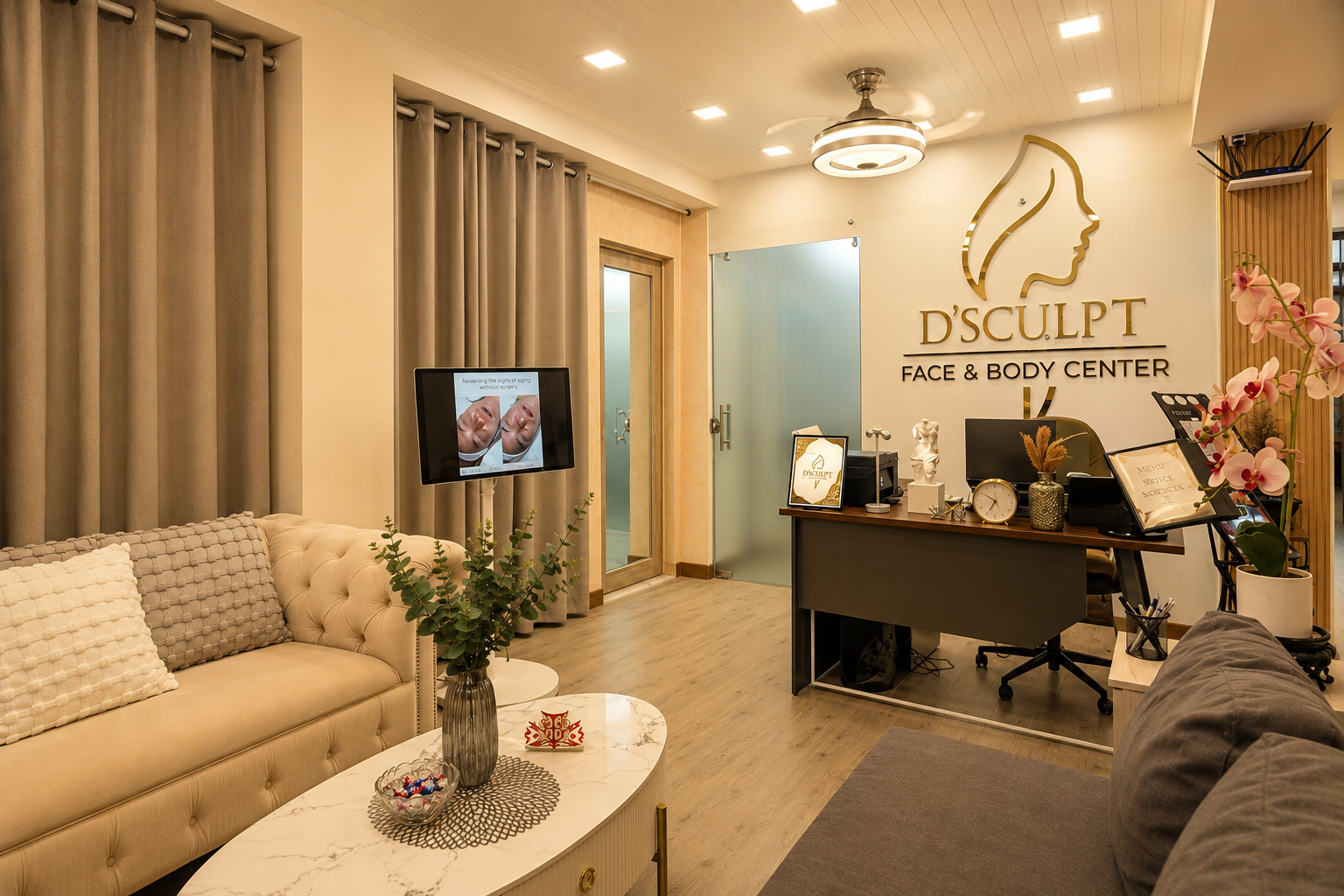
At D’Sculpt Face & Body Center in Cebu City, Dr. Donna Borres Eramis approaches consultation by first understanding the patient’s concerns, expectations, anatomy, and individual circumstances before discussing possible treatment options.
For patients considering cosmetic surgery, that is a useful principle regardless of which surgeon they ultimately choose:
Don’t simply ask who can perform the procedure. Ask who can help you decide whether the procedure is right for you.
About Dr. Donna Borres Eramis
Dr. Donna Borres Eramis is a Cebu-based physician practicing in advanced aesthetic medicine and cosmetic surgery and the founder of D’Sculpt Face & Body Center. She completed cosmetic surgery training with the Philippine Academy of Aesthetic Surgery (PAAS) and passed the Philippine Federation of Cosmetic Surgeons (PFCS) board examination.
Through D’Sculpt Face & Body Center, she provides individualized consultations and surgical and non-surgical aesthetic treatment planning, with an emphasis on patient education, realistic expectations, and continuity of care.
Ready for a Care Plan Made Just for You?
You deserve honest advice and safe medical care. At D'Sculpt Face & Body Center, we take the time to help you make smart choices for your skin.
Visit us on the 4th Floor, 2040 Singson Subdivision, Barangay Guadalupe, Cebu City, or check out our plans online.